
Soaking Enzymes
Soaking enzymes are advanced enzymatic formulations developed to optimize the initial stage of leather processing by ensuring efficient rehydration and deep cleansing of raw hides and skins. Engineered with targeted enzyme systems, these solutions facilitate the removal of blood, dirt, soluble proteins, and other impurities while promoting uniform water penetration throughout the hide structure.
Designed for modern industrial applications, soaking enzymes enhance process efficiency by reducing soaking time, improving consistency, and minimizing reliance on harsh chemicals. Their controlled enzymatic action supports better downstream performance in operations such as liming and unhairing, ultimately contributing to superior leather quality.
By integrating biotechnology with process optimization, soaking enzymes enable tanneries to achieve cleaner production, improved operational control, and sustainable manufacturing standards aligned with global environmental expectations.
Amylase
Amylase enzymes for soaking are advanced biochemical solutions designed to enhance the efficiency and effectiveness of the initial leather processing stage. Specifically formulated to target carbohydrate-based impurities, these enzymes hydrolyze complex starches and polysaccharides into soluble sugars, enabling their easy removal during soaking.
Integrated into modern multi-enzyme systems, amylase plays a critical role in ensuring thorough cleaning and uniform rehydration of hides and skins. Its action complements proteolytic enzymes and wetting agents, resulting in improved substrate preparation for subsequent operations such as liming and unhairing.
Engineered for industrial performance, amylase-based soaking solutions contribute to optimized processing time, reduced chemical dependency, and enhanced consistency in leather quality. By supporting cleaner production and improved process control, they align with the evolving demands of sustainable and high-performance leather manufacturing.

Key Benefits
• Removes starch and carbohydrate impurities
• Improves rehydration and cleanliness
• Enhances process efficiency
• Reduces chemical usage
• Supports better leather quality and sustainability
Alkaline Protease
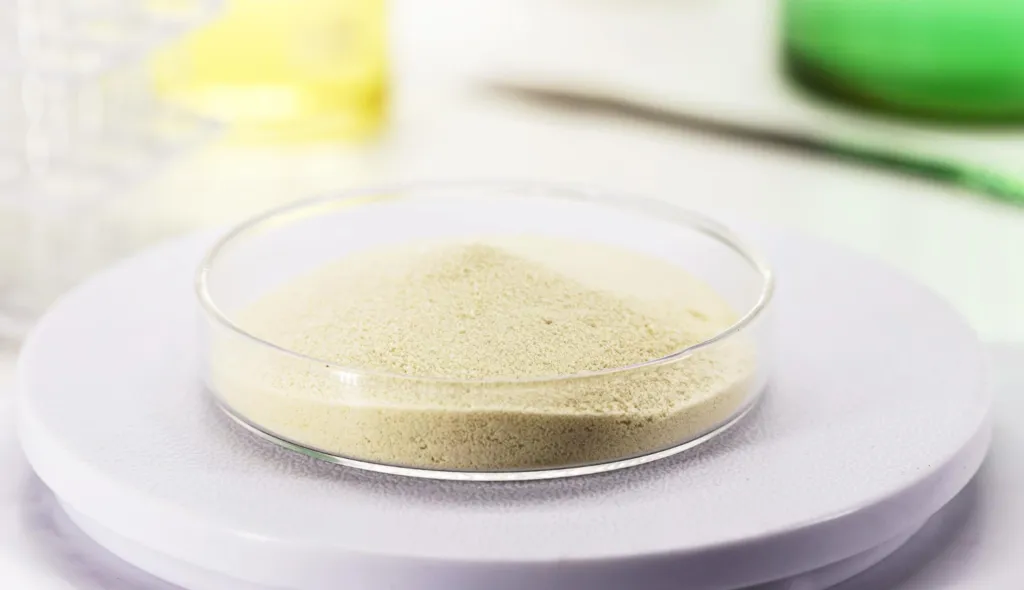
Alkaline protease for soaking is an advanced enzymatic solution engineered to optimize the initial stage of leather processing by delivering efficient cleaning and uniform rehydration of hides and skins. Designed to perform under alkaline conditions, it selectively hydrolyzes non-structural proteins such as blood residues and soluble impurities, enabling their effective removal without compromising the integrity of the collagen matrix.
Integrated into modern soaking systems, alkaline protease enhances process consistency, reduces soaking time, and improves the overall substrate quality for downstream operations including liming and unhairing. Its controlled enzymatic action supports better chemical penetration and uniform processing performance across a wide range of raw materials.
Developed for industrial-scale applications, alkaline protease contributes to reduced chemical dependency, improved operational efficiency, and environmentally responsible manufacturing, aligning with the evolving standards of sustainable leather production.
Key Benefits
• Enhances removal of protein impurities
• Improves rehydration and water penetration
• Reduces soaking time
• Ensures uniform and consistent processing
• Lowers chemical usage
• Improves final leather quality
• Supports eco-friendly and sustainable operations