
Sugar Processing Enzymes
Antozyme Biotech delivers cutting-edge enzymatic solutions designed to transform sugar production, helping factories achieve higher efficiency, sustainability, and product quality. Our specialized enzymes including amylases, glucoamylases, glycosidases, and isomerases enable precise conversion of raw starches and other carbohydrate sources into refined sugars, high-fructose syrups, lactose-free products, and specialty sweeteners.
By leveraging Antozyme’s enzyme technology, sugar manufacturers can reduce energy consumption, minimize chemical usage, and streamline production under mild, eco-friendly conditions. Our solutions empower modern sugar industries to meet rising consumer demand for cleaner, functional, and high-quality sugar products while maximizing operational efficiency.
Antozyme Biotech: Driving innovation, sustainability, and excellence in sugar processing through advanced enzymatic technology.
Enzymes like α-amylase, dextranase and invertase play pivotal roles in optimizing sugar extraction, improving crystal yield, and ensuring consistent product quality. By harnessing nature’s tools, today’s sugar industry achieves higher efficiency, cleaner processes, and more sustainable production.
Alpha Amylase
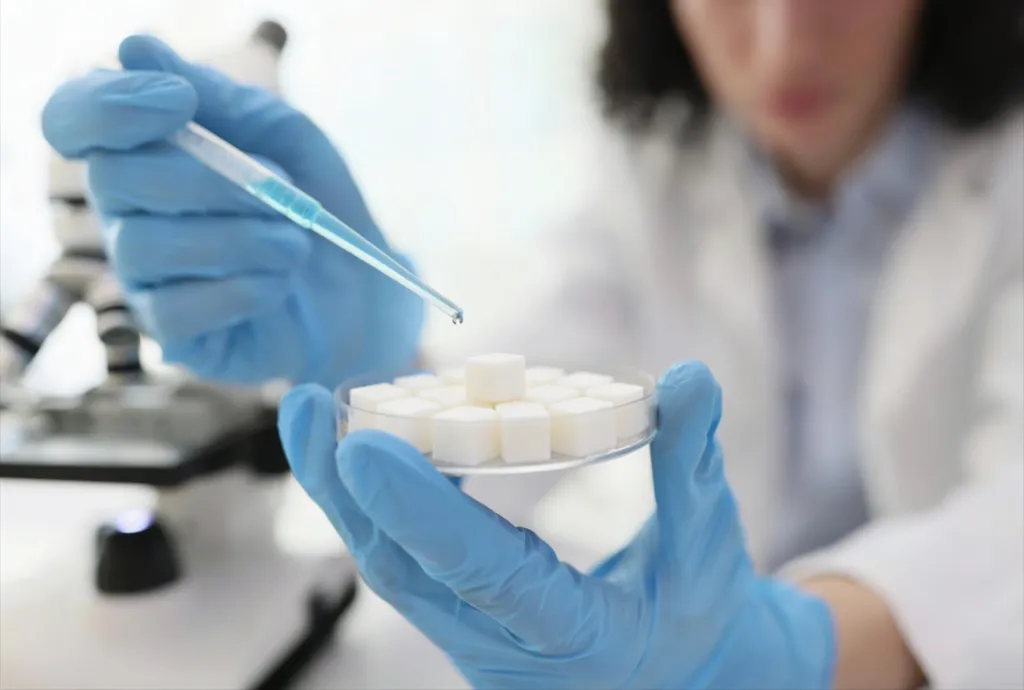
Amylases are a group of enzymes that catalyze the breakdown of starch into simpler sugars, playing a vital role in the sugar manufacturing process. In the sugar industry, starch present in sugarcane or other raw materials can interfere with sugar extraction and reduce yield if not properly hydrolyzed. Amylases are therefore applied to efficiently convert starch into fermentable or extractable sugars, improving both efficiency and product quality.
Applications in Sugar Factories:
• Prepares raw juice by hydrolyzing starch residues.
• Reduces viscosity of cane or beet juice, improving filtration and clarification.
• Enhances overall sugar recovery and process efficiency.
Dextranase
Dextranase is an enzyme produced through the controlled fermentation of a non-GMO fungal strain. It specifically hydrolyzes the α-(1,6) glucosidic bonds in dextran, releasing either glucose or isomaltose (by exodextranases) or isomalto-oligosaccharides (by endodextranases).
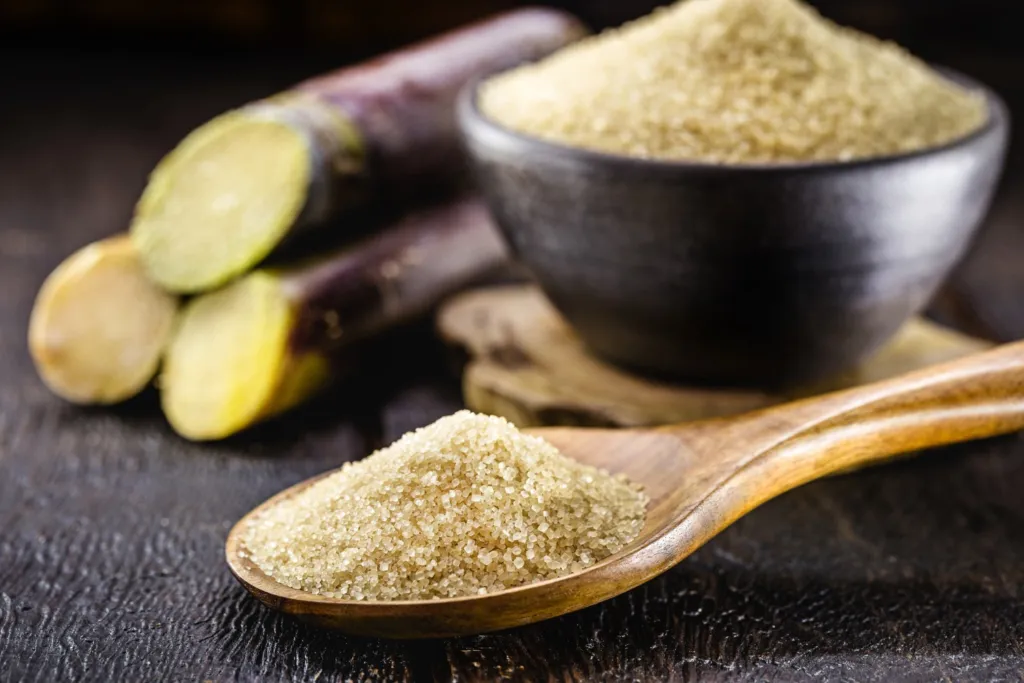
In sugar production, dextrans are undesirable compounds synthesized by contaminant microorganisms from sucrose. These dextrans increase the viscosity of sugar juice, reduce industrial recovery, and cause significant economic losses. Dextranase is the most efficient method to hydrolyze dextrans in sugar mills, restoring flow properties and improving yield.
While dextranase can be produced by certain bacterial strains, filamentous fungi, and a few yeasts, fungal dextranases are preferred in industrial applications. They exhibit the highest reaction rates at low Brix, with pH around 5.0 and temperature near 50 °C, conditions that closely match those during juice extraction. Several commercial enzymatic preparations of fungal dextranase have been successfully used to hydrolyze dextrans at this stage.
In later stages of sugar processing, where dextrans have already accumulated, the juice or syrup typically has higher Brix and temperature. Although volumes are smaller, effective treatment under these conditions requires increased enzyme doses, leading to higher dextranase consumption.
Key Benefits:
Efficient hydrolysis of dextrans
Improved sugar juice flow and industrial recovery
Optimal activity under conditions present during juice extraction
Reduces losses caused by contaminant dextrans
Invertase
Invertase, also known as β-fructofuranosidase, is a vital enzyme widely used in the sugar and food industries. It catalyzes the hydrolysis of sucrose into its component
monosaccharides, glucose and fructose. This reaction produces invert sugar, a mixture that is sweeter, more soluble, and less prone to crystallization than regular sucrose.
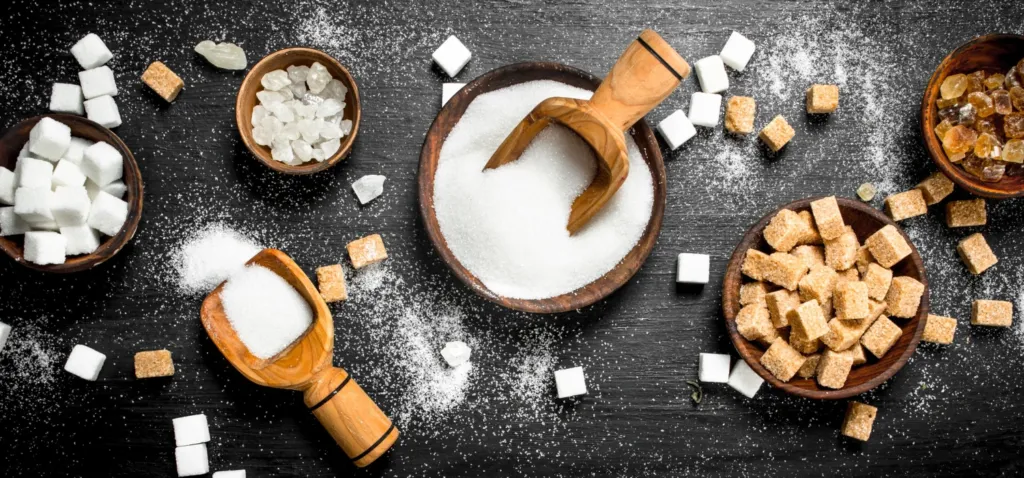
The ability of invertase to transform sucrose into invert sugar has significant industrial importance. In the confectionery industry, invert sugar helps prevent crystallization in candies and fondants, resulting in smoother textures. In beverages and syrups, it enhances sweetness and solubility, while in baking, it improves moisture retention and contributes to desirable browning reactions.
Invertase is naturally found in yeasts such as Saccharomyces cerevisiae and in certain plants like carrots and sugar beets. Its application in various industries highlights its
economic and functional importance, making it a critical enzyme for food processing and sugar modification.
Invertase
Invertase, also known as β-fructofuranosidase, is a vital enzyme widely used in the sugar and food industries. It catalyzes the hydrolysis of sucrose into its component
monosaccharides, glucose and fructose. This reaction produces invert sugar, a mixture that is sweeter, more soluble, and less prone to crystallization than regular sucrose.
The ability of invertase to transform sucrose into invert sugar has significant industrial importance. In the confectionery industry, invert sugar helps prevent crystallization in candies and fondants, resulting in smoother textures. In beverages and syrups, it enhances sweetness and solubility, while in baking, it improves moisture retention and contributes to desirable browning reactions.
Invertase is naturally found in yeasts such as Saccharomyces cerevisiae and in certain plants like carrots and sugar beets. Its application in various industries highlights its
economic and functional importance, making it a critical enzyme for food processing and sugar modification.
Application
Production of Invert Sugar
Converts sucrose into a mixture of glucose and fructose, which is sweeter and more soluble than sucrose.
Used as a liquid sweetener in beverages, syrups, and confectionery.
Prevention of Crystallization
Invert sugar resists crystallization, making it ideal for soft sugar products like fondants, toffees, and soft candies.
Ensures uniform texture and consistency in processed sugar products.
High-Fructose Syrup Production
Acts as a precursor in the production of high-fructose corn syrup (HFCS) and other sweeteners used in industrial applications.
Sugar Refining and Processing
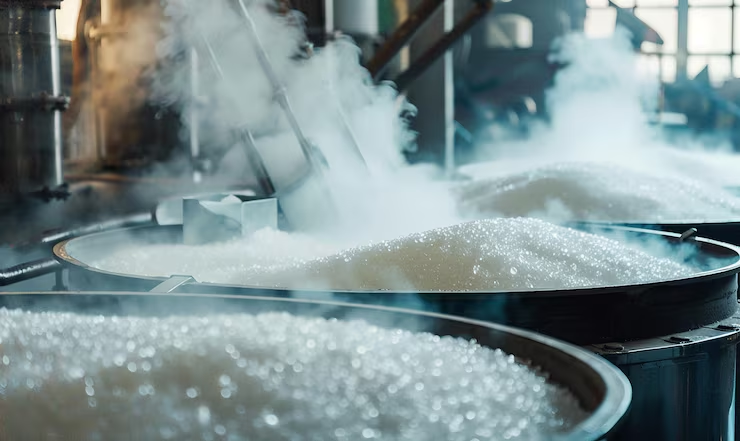
Helps improve processing efficiency by reducing sucrose crystallization in syrups during refining.
Produces stable sugar solutions for storage and transport.
Specialty Sugar Products
Used to produce liquid sugar, soft sugar, and glucose-fructose blends for industrial food manufacturing.
Enhances sweetness, solubility, and shelf life of sugar-based products.